Dry hair remedies at home are genuinely one of the most satisfying beauty discoveries you can make — because the ingredients that work best are often already sitting in your kitchen, they cost a fraction of what salon treatments charge, and the results, when you use the right combinations consistently, are completely real. Not marketing-real. Actually real.
If your hair has been through a difficult season — heat styling, color treatments, harsh winters, too much sun, or simply months of not getting the moisture it needed — the good news is that recovery is possible without spending a significant amount of money or time. A weekly DIY hair mask is one of the most effective dry hair remedies at home available, and the seven recipes in this guide cover every variation of dryness and damage you are likely to encounter.
Before you dive in: consistency is everything with these treatments. One mask will feel different. Seven weeks of masks will transform your hair. Commit to a weekly routine and you will be genuinely surprised by what your hair looks like two months from now.
Before You Start: What You Need to Know
Getting the most out of these dry hair remedies at home requires a few practical steps before you begin. Skipping these makes the difference between a mask that works and one that leaves you disappointed.
Always patch test first. Before applying any new mask to your full head of hair, apply a small amount to the inside of your forearm and wait twenty minutes. If you notice any redness, itching, or irritation, that specific ingredient is not right for your skin or hair — and you will want to know this before it is in your hair.
Frequency matters more than duration. These masks do not need to stay on for hours to work. For most hair types, twenty to sixty minutes is sufficient. For severely dry or heat-damaged hair, leaving a mask on overnight is an option — but use a disposable shower cap and lay a towel over your pillow. Wash it out thoroughly in the morning.
Oil-based masks on dry hair, water-based masks on damp hair. This is one of the most important practical distinctions in DIY hair masking. Oil-based masks (the ones in this guide that are primarily oils) penetrate more effectively on dry hair rather than wet hair. Try both with each recipe and see what your hair responds to best.
Section your hair before applying. Divide into roughly four sections and clip each one separately. Work from section to section, making sure to saturate the ends thoroughly — they are always the driest part and need the most attention. If your scalp tends toward oiliness, apply oil-based masks starting approximately one inch away from the scalp.
Use a wide-tooth comb or your fingers to distribute the mask. Once applied, pile your hair up and cover with a disposable shower cap to allow the ingredients to penetrate without drying out.
Rinse and shampoo thoroughly after every mask. Cool to lukewarm water is best — hot water reopens the cuticle and washes out the conditioning benefits you just spent time applying. You may need to shampoo twice to remove all residue, particularly with heavier oil-based masks.
Adjust quantities for your hair length. All recipes in this guide are written for a standard medium length. If your hair is longer or thicker, double the amounts while keeping the same ratios.
What You Will Need
Most of these dry hair remedies at home require only a few basic tools and ingredients:
Tools: Disposable shower caps, a wide-tooth comb, hair clips, a mixing bowl and brush, and optionally a blender or food processor for the avocado and banana masks.
Key ingredients: Extra virgin olive oil, coconut oil, jojoba oil, sweet almond oil, argan oil, raw honey, ripe avocados, ripe bananas, whole milk, and orange essential oil.
Quality matters with oils specifically. The difference between an extra virgin olive oil and a refined one, or between a raw unprocessed honey and a processed supermarket version, is genuinely significant in how well these masks perform. Cold-pressed, organic versions of these oils provide the most intact nutrients and produce the best results.
Mask 1: Olive Oil and Coconut Oil
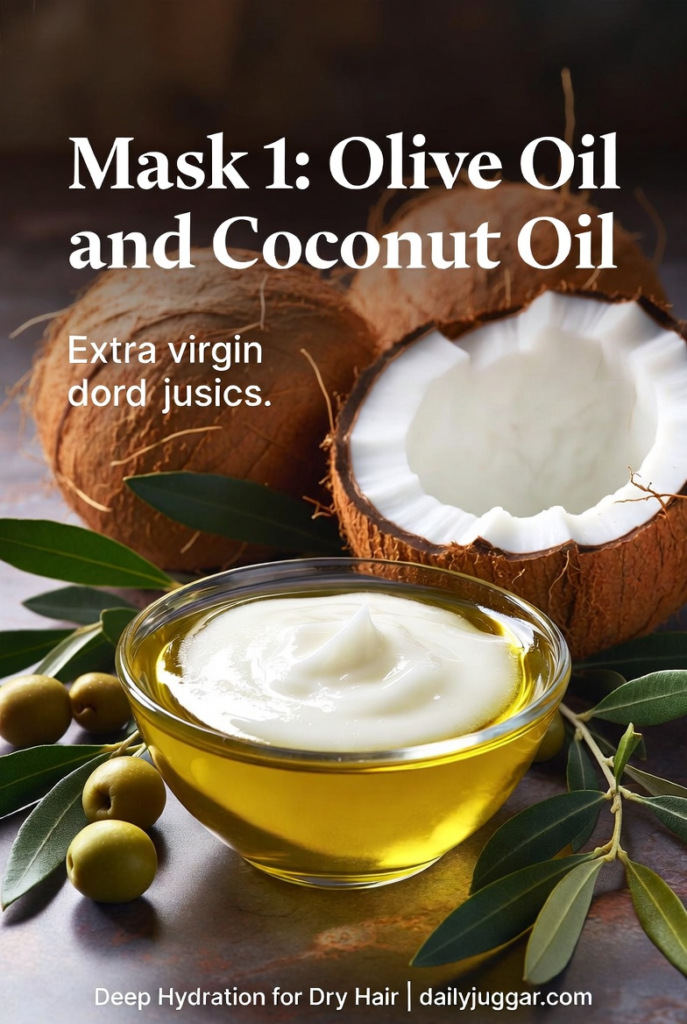
This is the foundational recipe in the dry hair remedies at home toolkit — two oils that are both capable of penetrating the hair shaft rather than simply coating it. Most oils sit on the surface of the hair and provide a temporary shine without addressing the underlying dryness. Olive oil and coconut oil are genuinely different: they reach the cortex of the hair where structural damage actually occurs.
Why these two ingredients work:
Olive oil is rich in vitamin E and omega-3 fatty acids — a combination that deeply conditions, strengthens the hair shaft, improves elasticity, reduces breakage, and adds a shine that comes from the hair’s actual health rather than a surface coating. It protects against heat damage and is particularly effective for extremely dry hair because its weight means it penetrates deeply and stays in longer.
Coconut oil contains fatty acids and vitamin E that moisturize, nourish, and — importantly — reduce protein loss. Hair loses protein through chemical treatments, heat styling, and environmental damage, and this loss is one of the primary causes of brittleness and breakage. Coconut oil addresses this at a structural level that conditioning products typically cannot reach.
Note for coarse or thick hair: Some women with coarser or thicker hair find that coconut oil causes a protein-buildup effect that makes the hair feel drier rather than more moisturized. If this happens, replace the coconut oil with sweet almond oil or argan oil in the same quantity — both provide excellent moisture without the protein-buildup risk.
Note for fine hair: Fine hair may respond better to a reversed ratio — two parts coconut oil to one part olive oil — as the lighter coconut oil will not weigh fine hair down as much as the heavier olive oil might.
Ingredients
- 2 tablespoons extra virgin olive oil
- 1 tablespoon coconut oil
Instructions
- If your coconut oil has solidified (it does this below 76°F), gently warm it. Place a small bowl of coconut oil inside a larger bowl of hot water and allow it to liquefy — do not microwave the oil directly, as this degrades some of its beneficial properties.
- Combine the liquefied coconut oil and olive oil in a mixing bowl and stir together thoroughly.
- Apply to sectioned hair, saturating the ends and any visibly damaged areas particularly well.
- Cover with a shower cap and leave for 30 to 60 minutes.
- Rinse with cool water, shampoo (you may need two rounds depending on how much oil you used), and follow with your regular conditioner.
Mask 2: Olive Oil and Avocado
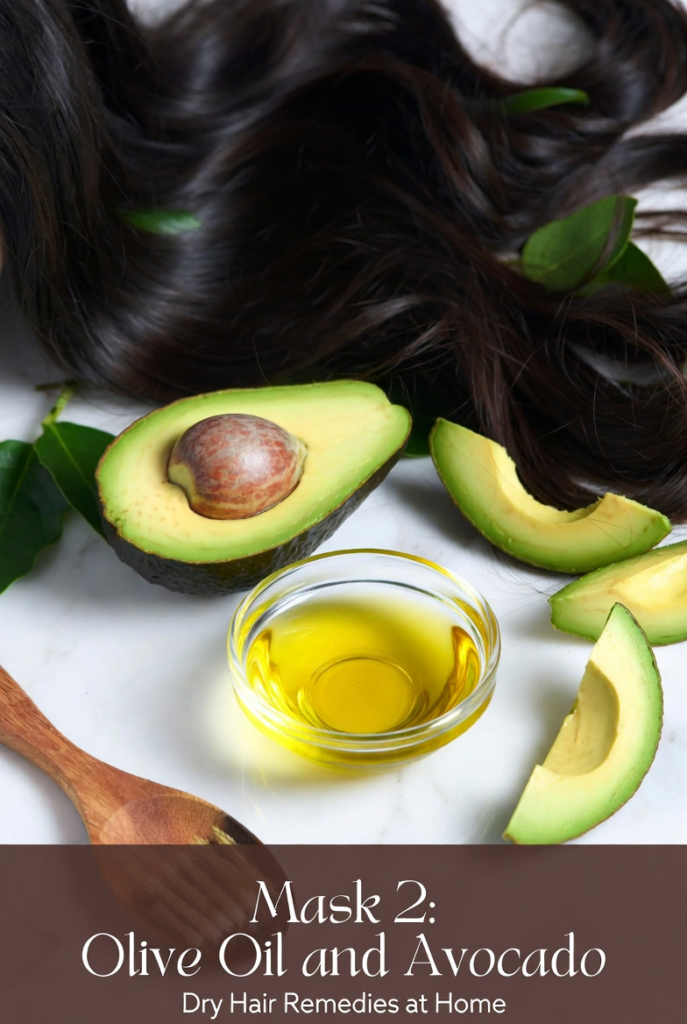
If the olive oil and coconut oil mask is the workhorse of dry hair remedies at home, the olive oil and avocado combination is the luxury spa treatment. Avocado brings a different dimension of nourishment to the equation — its natural fatty acids, vitamin E, and vitamin B content work together to moisturize, strengthen, repair, and — as a bonus — naturally detangle the hair.
Why these two ingredients work:
Olive oil’s deep conditioning properties are covered above. Its particular value in this combination is its weight — heavier than avocado alone, it helps the mask penetrate more deeply and remain in the hair shaft longer during the treatment period.
Avocado is genuinely extraordinary as a hair ingredient. Its essential fatty acids have an affinity for the hair shaft that makes them particularly effective at penetrating and moisturizing from within. Vitamin E repairs oxidative damage to the hair follicle. The natural oils in avocado leave hair with a genuine, lasting softness and a shine that is notably different from what synthetic conditioners produce.
The avocado also acts as a natural detangler — after rinsing this mask, you will notice immediately how much more manageable the hair is, even before applying conditioner.
Important: The avocado must be ripe. Underripe avocado will not blend smoothly and will not provide the same nutrient content. You want an avocado that is soft to the touch and dark in color — one that is at its peak ripeness.
Ingredients
- 1 ripe avocado
- 1 tablespoon extra virgin olive oil (can reduce to 2 teaspoons for shorter or finer hair)
Instructions
- Scoop the avocado flesh into a blender, food processor, or mixing bowl.
- Blend until completely smooth — this step is critical. Any chunks in the avocado will create a cleanup nightmare in the hair. Think baby-food smooth.
- Add the olive oil and blend again until fully combined and silky.
- Apply to sectioned hair and cover with a shower cap.
- Leave on for 20 to 30 minutes — longer if you have time and your hair is severely damaged.
- Rinse very thoroughly (avocado rinses out less easily than oils), shampoo completely, and condition.
Mask 3: Milk and Honey
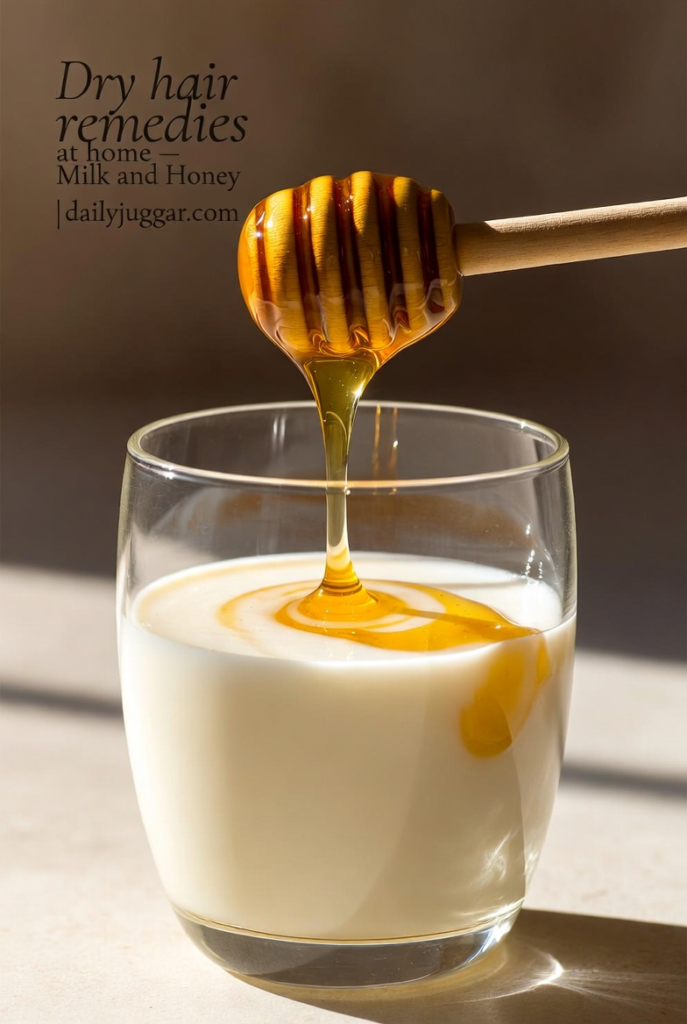
The milk and honey combination is one of the oldest and most consistently effective dry hair remedies at home — and its longevity is earned. These two ingredients work through completely different mechanisms that complement each other beautifully: milk provides protein and vitamins that strengthen and add luminosity, while honey is a natural humectant that actively draws moisture from the environment into the hair shaft and locks it there.
Why these two ingredients work:
Whole milk contains protein, calcium, vitamins B6 and B12, and a fat content that softens and nourishes the hair. The protein in particular helps rebuild the structural integrity that chemical treatments and heat styling strip away. The result is hair that feels stronger as well as softer — a combination that purely moisturizing treatments sometimes miss.
Raw honey is one of the most remarkable natural humectants available. Humectants attract moisture molecules from the surrounding air and bind them to the hair shaft — maintaining hydration throughout the day rather than simply delivering moisture during the treatment period. Honey also smooths the hair cuticle, softens coarse or rough texture, and adds a warm luminosity that is noticeably different from the results of oil-only treatments.
Important: Use raw, unprocessed honey for this and all the masks in this guide. Processed honey has been heated and filtered in ways that destroy many of the beneficial enzymes and compounds that make it so effective for hair.
Ingredients
- 1 cup whole milk
- 1 teaspoon raw honey
Instructions
- Warm the milk gently — lukewarm, not hot. Warm milk dissolves the honey more easily and is more comfortable to apply to the hair than cold milk.
- Add the honey to the warm milk and stir until fully dissolved.
- Apply to dry hair, focusing on the ends and any areas of visible damage.
- Leave on for 20 minutes.
- Rinse thoroughly, shampoo, and condition.
Mask 4: Coconut Oil and Honey
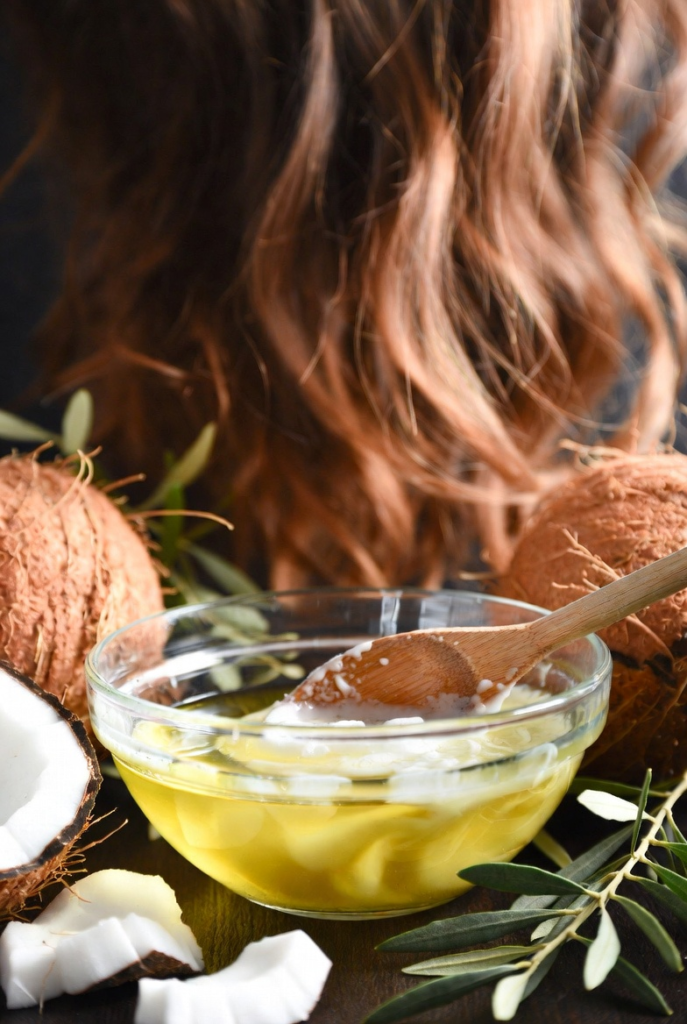
This combination brings together two of the most powerful individual ingredients in the dry hair remedies at home world — coconut oil’s penetrating moisture and structural protection paired with honey’s humectant and smoothing properties. Together they address dryness, brittleness, frizz, and lack of shine simultaneously.
Why these two ingredients work:
Coconut oil specifically targets the structural protein in the hair shaft. When hair is repeatedly wet and dried, styled with heat, or treated with chemicals, it loses protein that was part of its original structure — and this loss is what creates that characteristic brittle, straw-like texture that severely dry hair develops. Coconut oil reduces this ongoing protein loss while providing moisture and giving the hair a smooth, lustrous quality.
Honey adds the humectant benefit — locking in the moisture that coconut oil provides so that it lasts beyond the treatment itself. The combination of an oil that reduces protein loss and a humectant that locks in moisture addresses dry hair from two complementary angles.
Ingredients
- 1 tablespoon raw honey
- 1 to 2 tablespoons coconut oil (3 tablespoons for thicker or longer hair)
Instructions
- Warm the coconut oil gently using the bowl-in-warm-water method described in Mask 1.
- Add the honey to the liquefied coconut oil and mix thoroughly until fully combined.
- Apply to hair, working through all sections and paying particular attention to the ends.
- Cover with a shower cap and leave for 15 to 20 minutes.
- Rinse, shampoo thoroughly, and condition.
Mask 5: Avocado, Olive Oil, Honey, and Orange Essential Oil
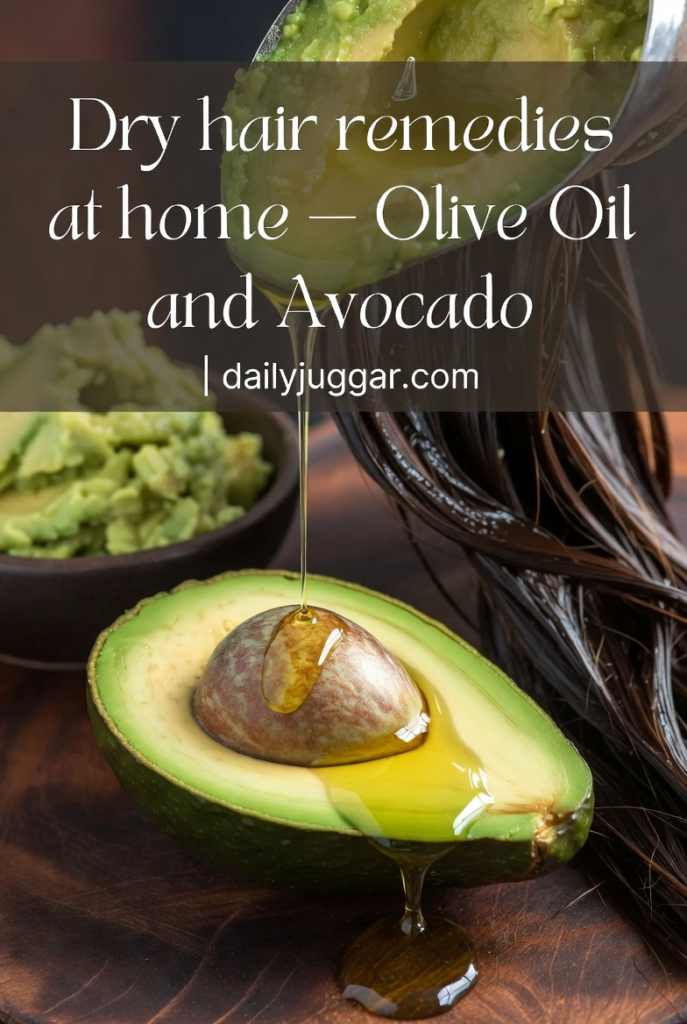
This is the most comprehensive and luxurious recipe in the dry hair remedies at home collection — a four-ingredient combination that addresses dryness, damage, frizz, breakage, and lack of shine simultaneously. It is the treatment to reach for when your hair is at its most depleted and needs everything at once.
Why these ingredients work together:
Avocado provides deep moisturization, fatty acids, and vitamins that strengthen and repair. Olive oil adds weight and penetration depth, helping the entire mask reach deeper into the hair shaft where the most significant structural damage occurs. Honey locks in the moisture that the oils deliver, extending the treatment’s effect beyond the wash itself. Orange essential oil — optional but recommended — adds a pleasant citrus scent while the limonene in citrus oils provides additional cleansing of the scalp and a brightness to the overall result.
This is the mask that works best for hair that has been through the most — repeated bleaching or coloring, months of heat styling without protection, or extended periods of neglect. Leave it on for the full hour if your schedule allows.
Ingredients
- 1 ripe avocado
- 2 tablespoons extra virgin olive oil
- 2 tablespoons raw honey
- 2 drops orange essential oil (optional)
Instructions
- Scoop the avocado into a blender or food processor along with the olive oil and honey.
- Blend until completely smooth with absolutely no chunks — this mask has more ingredients than the avocado-only version and requires thorough blending to fully combine.
- Transfer the blended mixture to a mixing bowl and add the optional orange essential oil. Stir to incorporate.
- Apply to sectioned hair, cover with a shower cap, and leave for 45 to 60 minutes.
- Rinse very thoroughly, shampoo completely (two rounds may be necessary), and condition.
Mask 6: Jojoba Oil and Coconut Oil
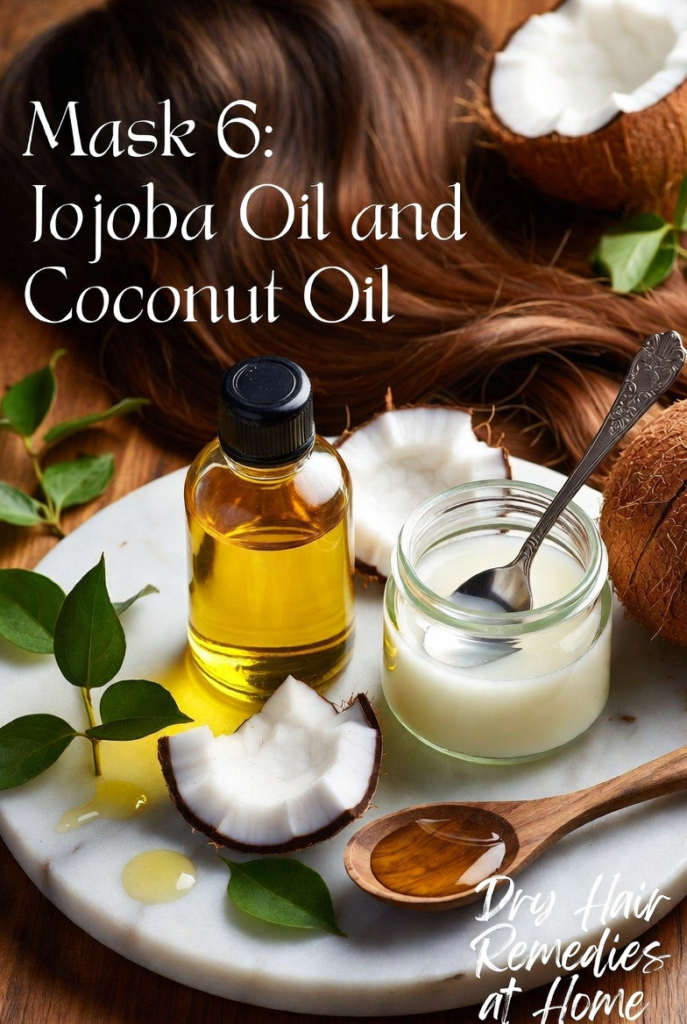
Jojoba oil is one of the most underrated ingredients in the dry hair remedies at home toolkit — and pairing it with coconut oil creates a combination that addresses hair dryness and scalp health simultaneously. Jojoba’s unique molecular structure makes it one of the few oils that genuinely penetrates both the hair shaft and the follicle, addressing dryness at both the surface and the root.
Why these two ingredients work:
Jojoba oil is chemically similar to the sebum that the scalp naturally produces — this similarity is what allows it to penetrate so effectively and why the hair and scalp accept it so readily. It contains vitamins C, B, E, copper, and zinc, all of which nourish both the hair shaft and the follicle. It is particularly beneficial for dry scalp and dandruff — a fact that makes it the ideal choice for women dealing with both a dry scalp and dry hair simultaneously.
Coconut oil brings its protein-protection and deep moisture properties to complement jojoba’s follicle-penetrating action. Together they cover the full range from follicle health at the root to structural protection throughout the hair shaft.
Ingredients
- 1 tablespoon jojoba oil
- 2 tablespoons coconut oil
Instructions
- Warm the coconut oil gently using the bowl method described earlier.
- Combine the liquefied coconut oil and jojoba oil in a mixing bowl and mix thoroughly.
- Apply to all sections of the hair.
- Leave on for 20 to 30 minutes under a shower cap.
- Rinse out completely with water, shampoo, and follow with conditioner.
Mask 7: Banana, Almond Oil, and Argan Oil
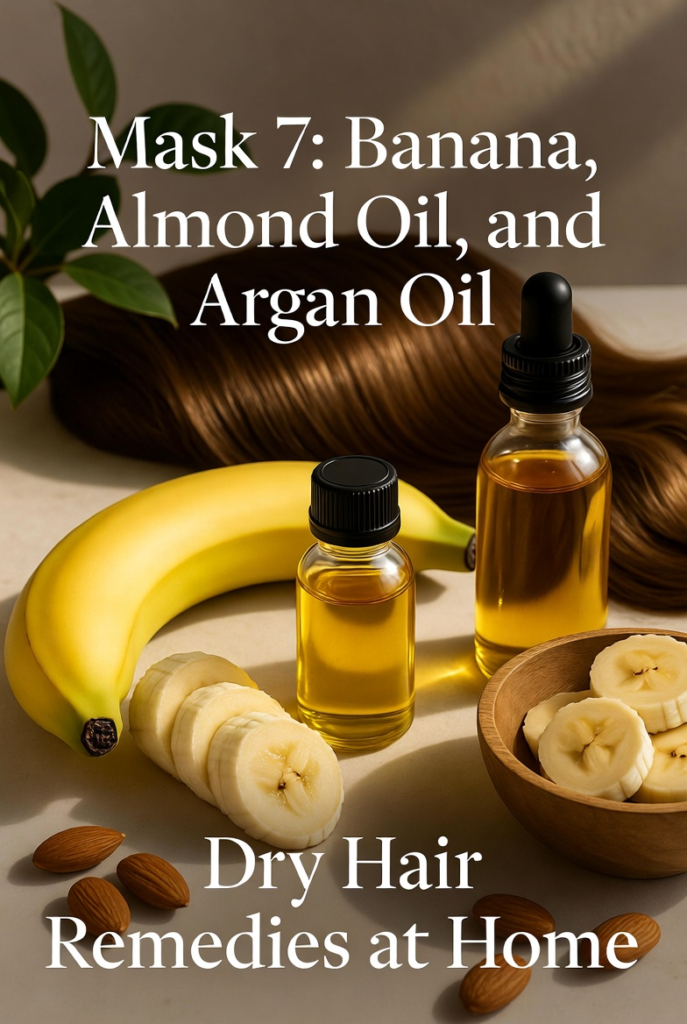
This is the frizz-fighting specialist of the dry hair remedies at home collection. For hair that is not just dry but specifically prone to frizz, brittleness, and unmanageability, the combination of banana’s softening and strengthening properties with sweet almond oil’s nourishment and argan oil’s smoothing and frizz-reducing action is genuinely remarkable.
Why these three ingredients work:
Banana is a surprisingly powerful hair ingredient. It softens, strengthens, moisturizes, and dramatically reduces frizz — all while preventing the breakage that comes from handling dry, brittle hair. The natural silica in banana also helps improve overall hair strength and shine over time with consistent use.
Sweet almond oil contains vitamin E, omega fatty acids, and magnesium — a combination that treats structural damage, reduces breakage and split ends, supports hair growth, and delivers a silky shine that lighter oils sometimes cannot provide.
Argan oil is lighter than most other oils in this guide, which makes it particularly versatile — it can be used more frequently than heavier oils without causing buildup. It is the ultimate frizz-reducing oil, smoothing the cuticle and adding a protective layer that guards against the humidity and environmental factors that make frizz worse. For split ends specifically, argan oil is one of the most consistently effective natural remedies available.
Important: Blend the banana completely smooth before adding the oils — there is no more frustrating hair mask cleanup than picking banana chunks out of the hair. A blender is strongly recommended over a fork or hand mixer for this recipe.
Ingredients
- 1 ripe banana
- ½ tablespoon sweet almond oil
- ½ tablespoon argan oil
Instructions
- Place the banana in a blender and blend until completely smooth and creamy — no chunks whatsoever.
- Add the almond oil and argan oil to the blended banana.
- Blend again until fully combined into a smooth, even paste.
- Apply to all sections of hair, cover with a shower cap, and leave on for 30 minutes.
- Rinse fully and thoroughly (banana requires particularly thorough rinsing), shampoo, and condition.
Additional Tips for Dry and Damaged Hair
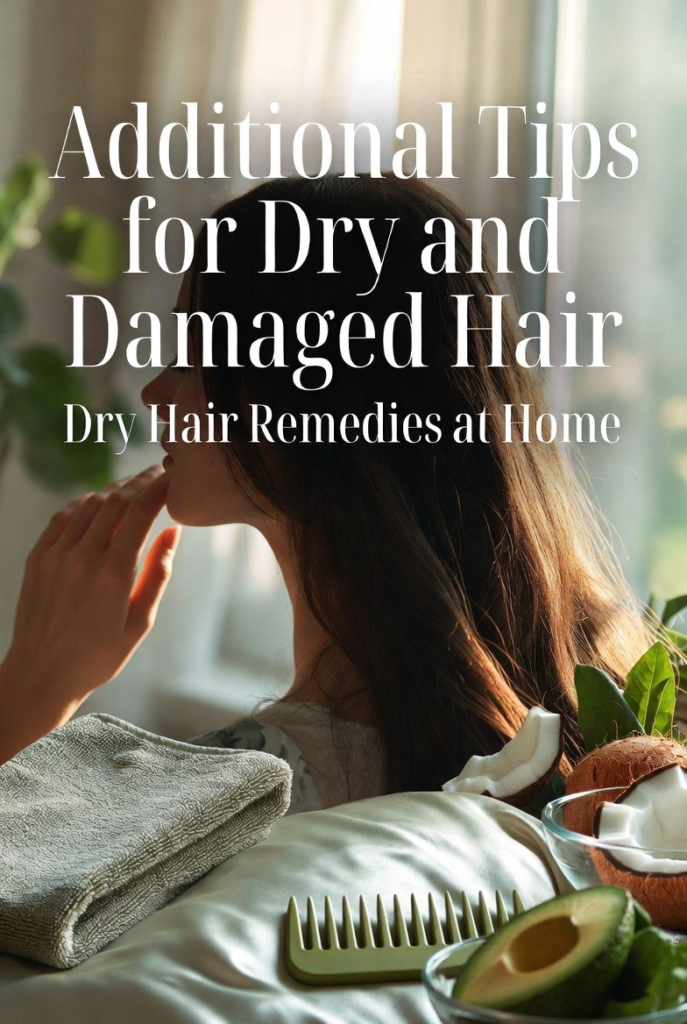
These dry hair remedies at home work most effectively when they are part of a broader approach to hair care that supports healthy moisture levels between treatments. A few additional practices that make a significant difference:
Switch to a microfiber towel for drying. Regular cotton towels create friction against the hair cuticle that causes frizz and contributes to breakage — particularly when hair is at its most vulnerable while wet. Microfiber towels absorb water more efficiently with significantly less friction.
Sleep on a satin or silk pillowcase. Cotton pillowcases absorb moisture from the hair throughout the night while also creating the friction that causes tangling and breakage. Satin or silk pillowcases maintain the moisture levels these dry hair remedies at home deliver and prevent the overnight damage that undoes your weekly mask work.
Wash with cool or lukewarm water, not hot. Hot water strips moisture from the hair shaft more aggressively than cool water — it opens the cuticle too widely and washes out natural oils along with the dirt and product buildup you are trying to remove. Lukewarm water cleanses effectively without that stripping effect. A cool final rinse seals the cuticle and adds noticeable shine.
Reduce heat styling frequency. Even the best dry hair remedies at home cannot fully overcome the damage caused by daily heat styling without heat protection. If you cannot give up heat tools entirely, always use a heat protectant spray applied to damp hair before any heat exposure, and choose the lowest effective temperature setting rather than defaulting to the highest.
For a complete guide to building a full hair care routine around these treatments, our hair care routine for women guide and hair care routine 2026 guide cover everything from washing frequency to styling technique in detail.
How to Choose the Right Mask for Your Hair
With seven options available, choosing the right starting point is simple when you match the mask to your specific concern:
| Hair Concern | Best Mask |
|---|---|
| Brittle, dull, and lifeless hair | Olive Oil and Coconut Oil |
| Extremely dry hair needing deep repair | Olive Oil and Avocado |
| Hair needing protein and luminosity | Milk and Honey |
| Dry and brittle with loss of shine | Coconut Oil and Honey |
| Severely damaged from coloring or heat | Avocado, Olive Oil, Honey, and Orange Oil |
| Dry hair with dry scalp or dandruff | Jojoba Oil and Coconut Oil |
| Frizzy, brittle hair prone to breakage | Banana, Almond Oil, and Argan Oil |
You do not need to commit to one mask for the entire season. Rotating between two or three that address your hair’s primary concerns keeps the routine interesting and provides a broader range of nutrients than any single mask alone.
Frequently Asked Questions
How often should I use dry hair remedies at home? Once a week is the ideal frequency for most of these masks — consistent enough to produce cumulative results, not so frequent that product buildup becomes an issue. For severely damaged hair, you can use a mask twice weekly during the first month, then drop to weekly maintenance once the hair has recovered.
Can I apply hair masks to dry hair? Yes — and for oil-based masks specifically, dry hair is often preferable. Oil penetrates dry hair more effectively than wet hair because there is no water competing for the same entry points in the hair shaft. Experiment with both dry and damp application to see which produces better results for your specific hair type.
How long should I leave a hair mask on? For most of these dry hair remedies at home, 20 to 60 minutes is sufficient. For overnight use (which is particularly beneficial for severely dry or damaged hair), use a disposable shower cap and protect your pillow with a towel.
Do I need to shampoo after a hair mask? Yes — always shampoo after an oil-based mask to remove the residue completely. Leaving oil residue in the hair does not provide additional benefit after the treatment period and will make the hair feel greasy. You may need to shampoo twice after heavier oil masks like the avocado combination.
Which mask is best for split ends? The banana, almond oil, and argan oil combination is the most targeted for split ends — argan oil in particular is one of the most consistently effective natural remedies for split end management. The olive oil and coconut oil mask is a strong alternative.
Will these masks help with hair growth? Dry hair remedies at home that restore moisture and reduce breakage indirectly support length retention by preventing the breakage that stops many women from achieving their length goals. For direct hair growth support, incorporating scalp massage during application and including rosemary oil as an addition to any of these masks provides additional follicle stimulation.
Build Your Complete Hair Health Routine
These seven dry hair remedies at home are most powerful as part of a complete, consistent approach to hair health rather than as occasional emergency treatments. Pair weekly masking with the right shampoo and conditioner for your hair type, limit heat styling and always use protection when you do, drink adequate water, and eat the nutrients your hair follicles need to produce healthy strands from the root.
Consistency over two to three months produces results that a single mask can only hint at. Your hair’s best condition is not something that happened once in the past — it is what sustained, informed care produces going forward.
For the styling inspiration to complement your healthier hair, our hair color trends 2026 guide and trending haircuts 2026 roundup show exactly where to take your restored hair next.
Visit dailyjuggar.com for more hair care guides, beauty tips, and style inspiration updated all year long.
Explore more: Hair Care Routine for Women | Hair Care Routine 2026 | Hair Color Trends 2026 | Trending Haircuts 2026 | Best Haircut for Round Face